Pure Urea Formaldehyde Powder For Wood
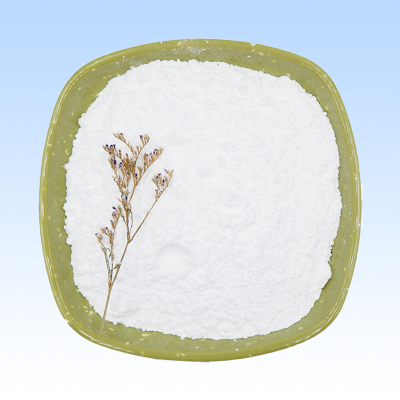
Pure UF resin powder contains no added flour, wood powder, or mineral fillers.
Consistent resin content gives buyers greater control over their adhesive formulations.
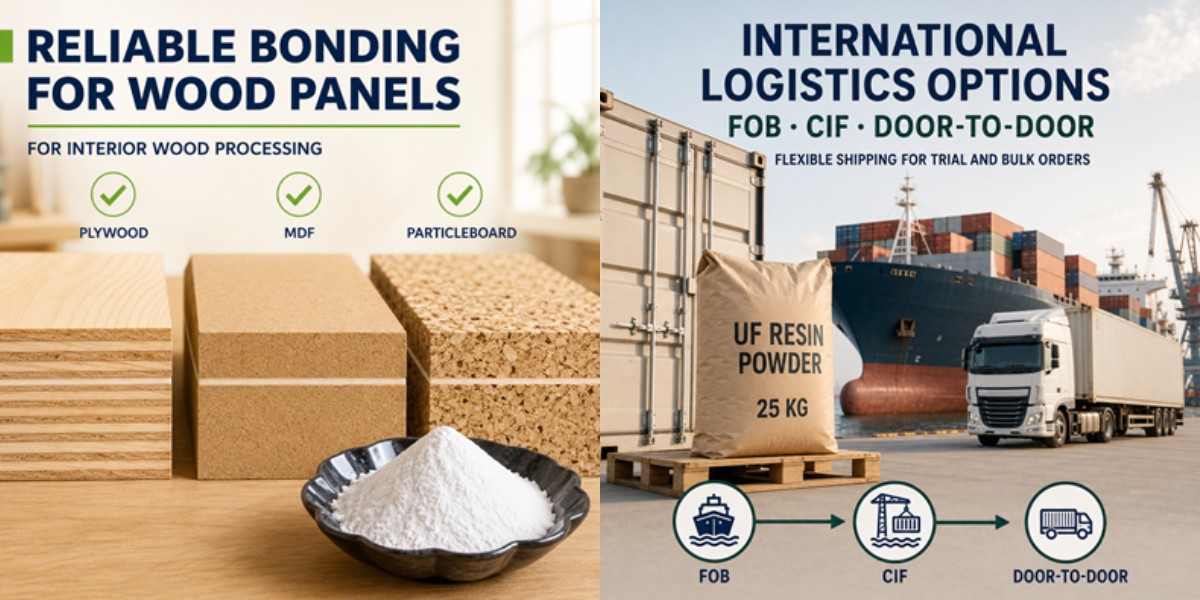
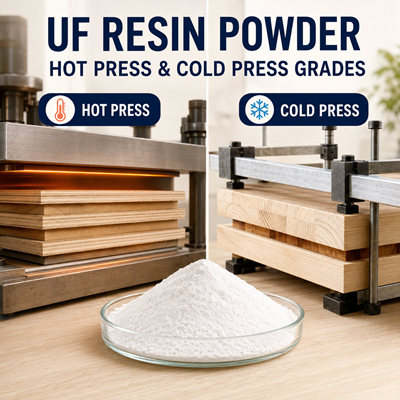
Available grades suit plywood, MDF, particleboard, and different pressing processes.
Easy water mixing and matched powdered hardener simplify production preparation procedures.
Samples and batch documents reduce uncertainty before commercial-scale purchasing decisions.
Standard 25 kg bags support trial shipments, container orders, and flexible delivery.
Pure UF Resin Powder for Controlled Adhesive Formulation
Urea Formaldehyde Powder is a water-mixable UF resin adhesive supplied as a fine white powder for wood-based panel manufacturing and general wood bonding. Unlike many ordinary adhesive powders that are pre-blended with flour, wood powder, calcium carbonate, kaolin or other inexpensive inert materials, our Urea Formaldehyde Powder is supplied on a 100% UF resin basis without deliberately added inert fillers.
This distinction gives manufacturers greater control over the final adhesive formulation. Instead of paying international freight for unknown or unnecessary fillers, buyers receive concentrated resin powder and can adjust water, hardener and any application-specific additives according to their own production requirements. The consistent resin content also makes it easier to compare batches, calculate actual adhesive cost and optimize glue spread.
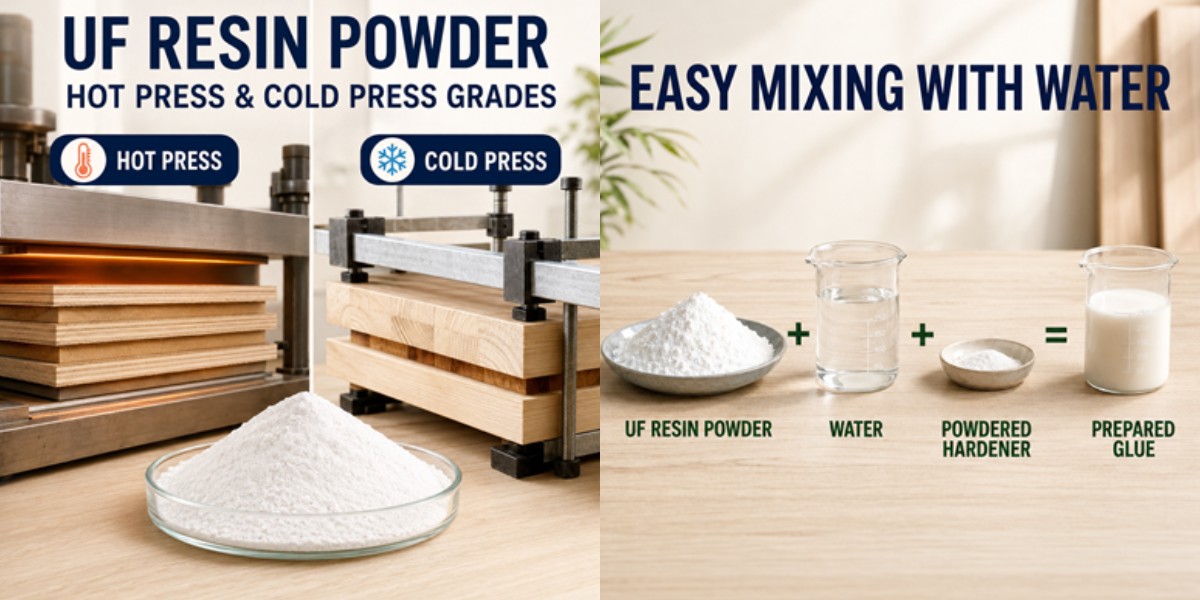
Chemcola offers different Urea Formaldehyde Powder grades for plywood, MDF, particleboard, veneer lamination and other interior wood-processing applications. Hot-press and cold-press options can be selected according to wood species, moisture content, press temperature, required working time and production speed. Before quotation, our team collects these operating details so that the recommended Urea Formaldehyde Powder matches the buyer’s actual process rather than relying only on a generic product name.
Purity clarification: “100% UF Resin” means the product is not intentionally diluted with flour, wood powder, calcium carbonate, kaolin or similar inert fillers. It does not mean laboratory reagent purity or zero moisture.
 What Buyers Are Actually Purchasing
One of the most frequent questions from international buyers is whether the material is pure resin powder or a ready-mixed adhesive containing fillers. The difference can significantly affect usable resin content, mixing flexibility, bonding performance and the real cost of each finished panel.
Pure UF resin powder allows the user to control the formulation instead of accepting a fixed premix. This is particularly valuable for panel manufacturers that process different wood species or operate under changing temperature and humidity conditions. The customer may add only the ingredients required by the selected production process, while avoiding unnecessary inert material in the imported product.
For purchasing teams, resin concentration is also an important commercial consideration. Two products with similar prices per ton may deliver very different quantities of active bonding resin. A lower-priced premixed powder can become more expensive when calculated according to effective resin content, glue consumption or finished-board output. Buyers should therefore compare product composition, mixing ratio, bond performance and batch documentation—not price per kilogram alone.
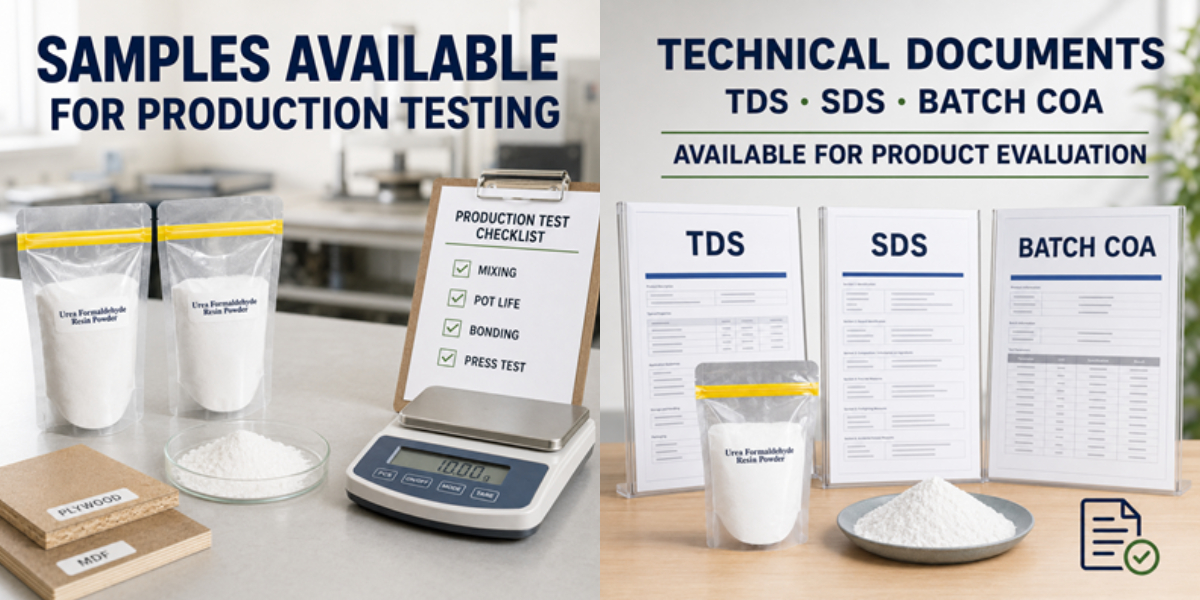
Chemcola can provide a sample, technical data sheet, safety data sheet and batch certificate of analysis for evaluation. Buyers may conduct dissolution, viscosity, working-time, pressing and bonding tests before moving to a larger order. This verification process helps distinguish a concentrated UF resin powder from an inexpensive filler-heavy mixture.
Typical Product Parameters
The following values are typical reference specifications. Exact values depend on the selected grade and should be confirmed by the quotation, technical data sheet and batch COA.
Parameter | Typical Reference |
Product type | Pure UF resin adhesive powder |
Appearance | Fine white powder |
Added inert fillers | None deliberately added |
Fineness | ≥95% passing 80 mesh |
Moisture | ≤3.0% |
pH value | 7.0–8.0 |
Typical viscosity | 3,500–4,000 or 5,500–7,000 mPa·s |
Reference bond strength | Above 1.8 MPa |
Reference gel time at 25°C | Approximately 1–2 hours, adjustable |
Initial powder-to-water ratio | Approximately 1:1 by weight |
Hardener | Matched powdered hardener available |
Applications | Plywood, MDF, particleboard and wood processing |
Process options | Grades for hot pressing and cold pressing |
Standard packaging | 25 kg kraft paper or woven bag |
Shelf life | Up to 12 months under recommended storage |
HS code | 39091000 |
Available documents | TDS, SDS and batch COA |
Viscosity, gel time and working life are influenced by product grade, water temperature, hardener dosage and ambient conditions. The figures above should therefore be used as initial references rather than fixed instructions for every production line.
Process Compatibility and Mixing Guidance
Customers commonly ask whether the powder can be used for plywood, MDF or particleboard and whether it is intended for hot pressing or cold pressing. These questions must be answered before selecting a grade because panel structure, wood moisture, press temperature and required assembly time all affect adhesive behavior.
For a typical starting formulation, UF resin powder is mixed gradually with clean water until a smooth and uniform adhesive is obtained. A common initial powder-to-water ratio is approximately 1:1 by weight, but the final ratio should be adjusted according to the target viscosity and application equipment. The matched hardener is also a solid powder and is introduced according to the selected grade, ambient temperature and required pot life.
The preparation principle can be shown as:
UF Resin Powder + Water + Powdered Hardener = Prepared Adhesive
Chemcola can provide process guidance covering the mixing sequence, reference ratios, hardener selection, working time and pressing conditions. For hot-press applications, temperature, pressure, glue spread and board thickness must be considered together. For cold-press work, open time and curing speed become especially important.
Because production conditions vary, customers are encouraged to begin with a laboratory or small-line trial. The formulation can then be adjusted using actual viscosity, spreadability, curing behavior and bond-test results rather than depending on a universal recipe.
Four Questions Buyers Commonly Verify
Is It Pure UF Resin or Premixed Powder?
Our standard pure grade is supplied without deliberately added flour, wood powder, calcium carbonate, kaolin or similar inert fillers. This provides more active resin per shipment and gives manufacturers control over any additives introduced during preparation.
Will It Match Our Board and Pressing Process?
Grades are available for plywood, MDF, particleboard and other wood-processing applications. The recommendation is based on the substrate, press type, temperature, production speed, wood moisture and desired working time.
How Should We Mix It?
A typical starting point is approximately equal parts powder and water by weight. Matched powdered hardener and process guidance are available. The precise formulation must be validated under the customer’s own production conditions.
Can We Test Before Buying in Bulk?
Samples are available for production testing. TDS, SDS and batch COA documents can be supplied for technical review. After successful testing, buyers can proceed to 25 kg bags, trial quantities or full-container procurement.
These four issues appeared repeatedly in enquiries from European, North American and Latin American buyers. Addressing them before quotation shortens product selection and reduces avoidable trial costs.
Samples, Documentation and Batch Verification
A technical specification alone cannot fully predict performance on every production line. Wood species, veneer quality, board density, moisture, climate and press settings may all influence the result. For this reason, Chemcola supports a test-first purchasing process.
Samples can be arranged for laboratory evaluation or production-line trials. Buyers may examine powder appearance, dissolution, adhesive viscosity, pot life, curing behavior and bonding performance. Where possible, the trial should use the same wood, glue-spreading equipment and pressing conditions planned for commercial production.
Technical documents are available to support evaluation and internal approval. The TDS describes the recommended application and typical properties. The SDS provides handling, storage and safety information. A batch COA records the inspected properties of the supplied batch. These documents help purchasing and technical teams evaluate the same material from commercial, operational and quality-control perspectives.
We do not use invented testimonials as proof of performance. Instead, confidence should be built through traceable documentation, representative samples and results obtained under the buyer’s own conditions. Once the sample is approved, the confirmed grade, packaging and batch requirements can be recorded for repeat orders, helping buyers maintain more consistent purchasing standards.
Packaging, Export Supply and Logistics Support
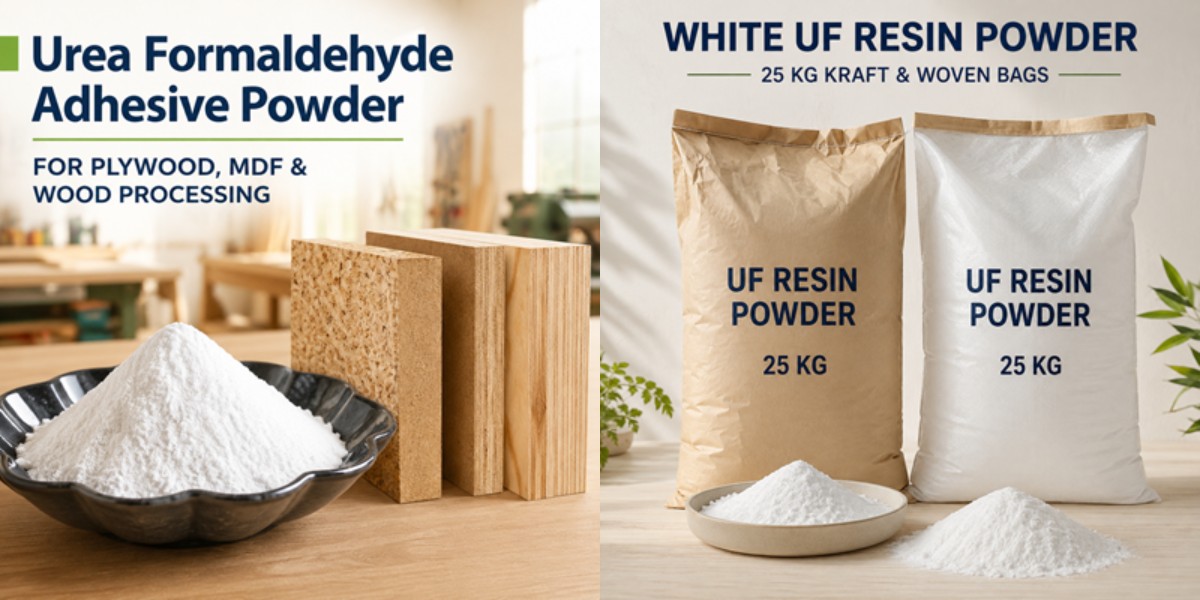
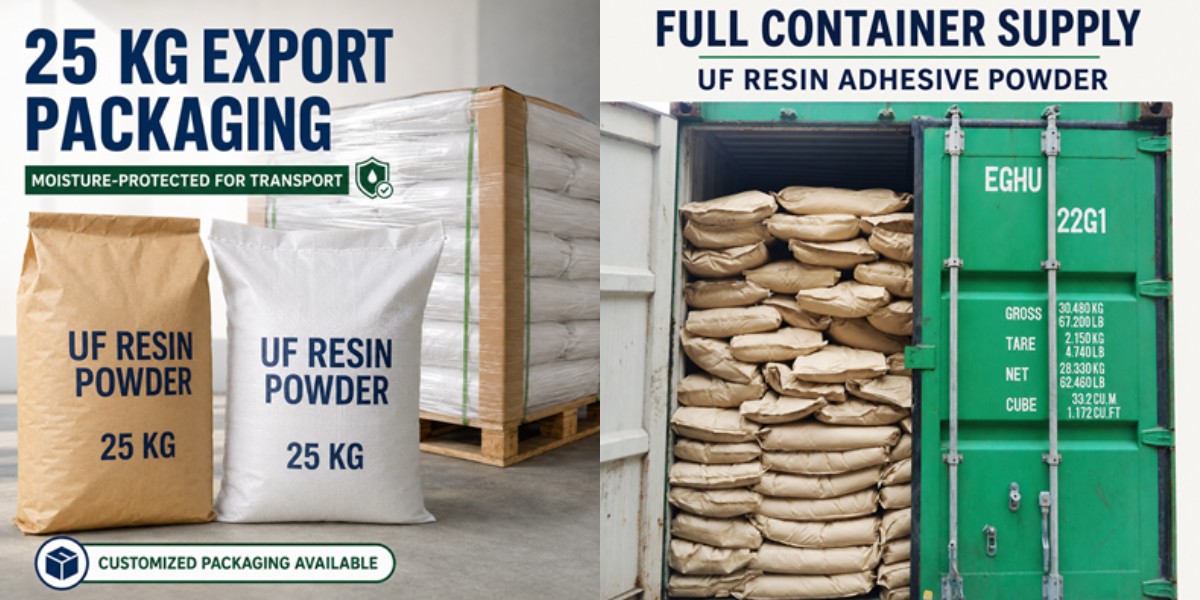
Standard export packaging is 25 kg per bag, with kraft paper bags and white woven bags available. Packaging should be selected according to handling methods, storage conditions and destination-market requirements. Customized printing, private labels and other packaging arrangements can be discussed for qualified orders.
The powder should be stored sealed in a cool, dry and ventilated location, protected from moisture, direct sunlight and excessive heat. Bags should be kept on pallets and away from wet floors or walls. Under recommended conditions, the typical shelf life can reach 12 months; storage in high-temperature environments may shorten usable life.
Chemcola has specialized in chemical raw-material exports since 2010. As an international trading and supply-chain company, we coordinate qualified partner factories, inspection documents, packaging, consolidation and international logistics. We do not represent ourselves as the manufacturer or conceal the commercial supply structure.
Trial orders and full-container orders can be supported according to the destination and product grade. Available trade and logistics arrangements include FOB, CIF and door-to-door delivery, subject to route availability and local import requirements. Our team can compare cargo quantity, port options and freight solutions to help buyers select a practical landed-cost plan.
Request a sample, technical data sheet and grade recommendation for your production test.