Urea Formaldehyde Adhesive Powder
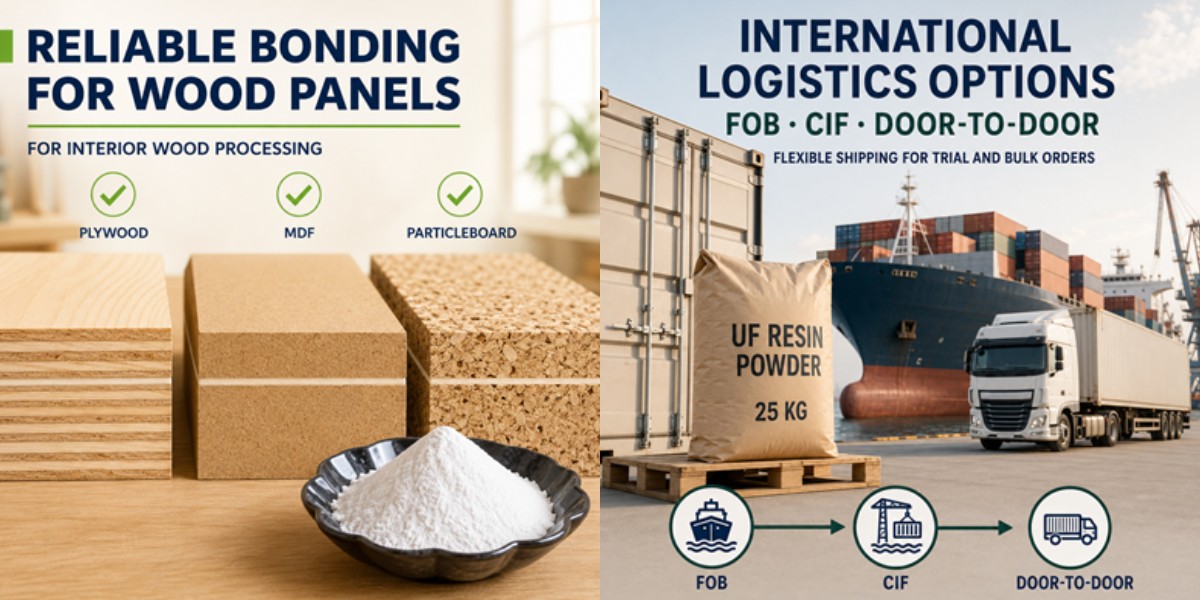
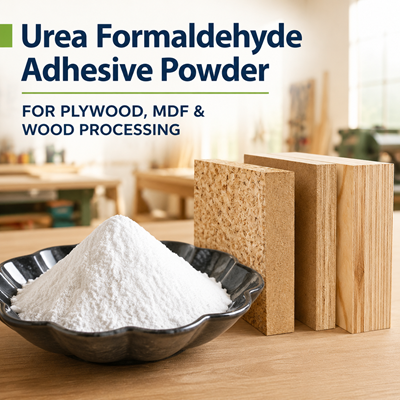
Easy-to-use powdered adhesive for plywood, MDF, particleboard and wood processing.
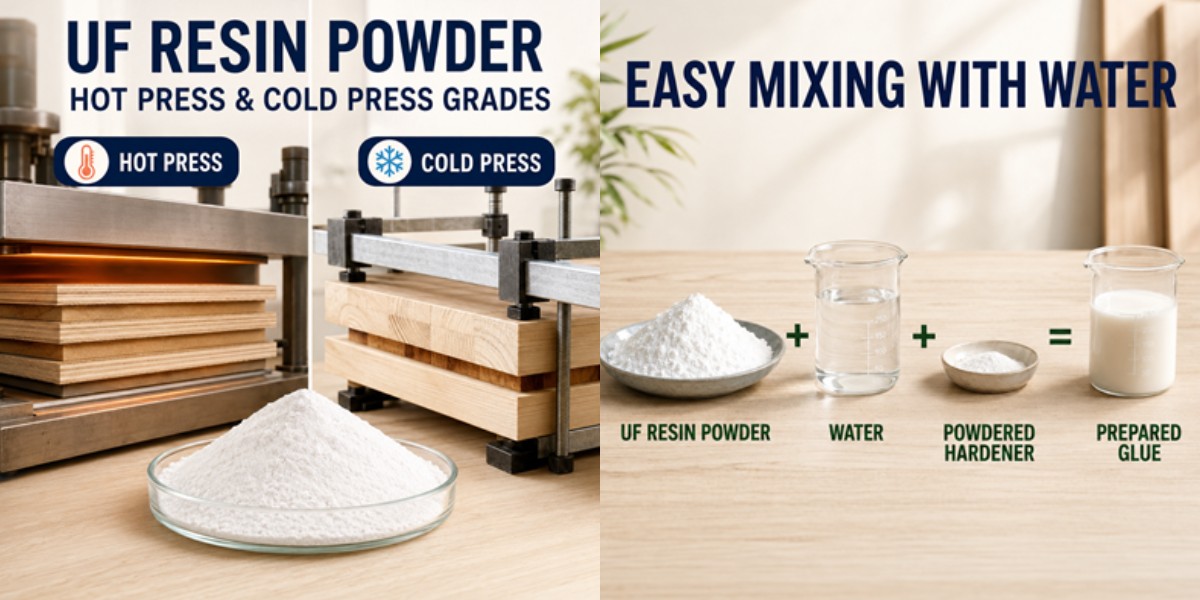
Grades are available for both hot press and cold press applications.
Powder form helps reduce transportation, handling and storage costs.
Mixes readily with water, with matched powdered hardener available when required.
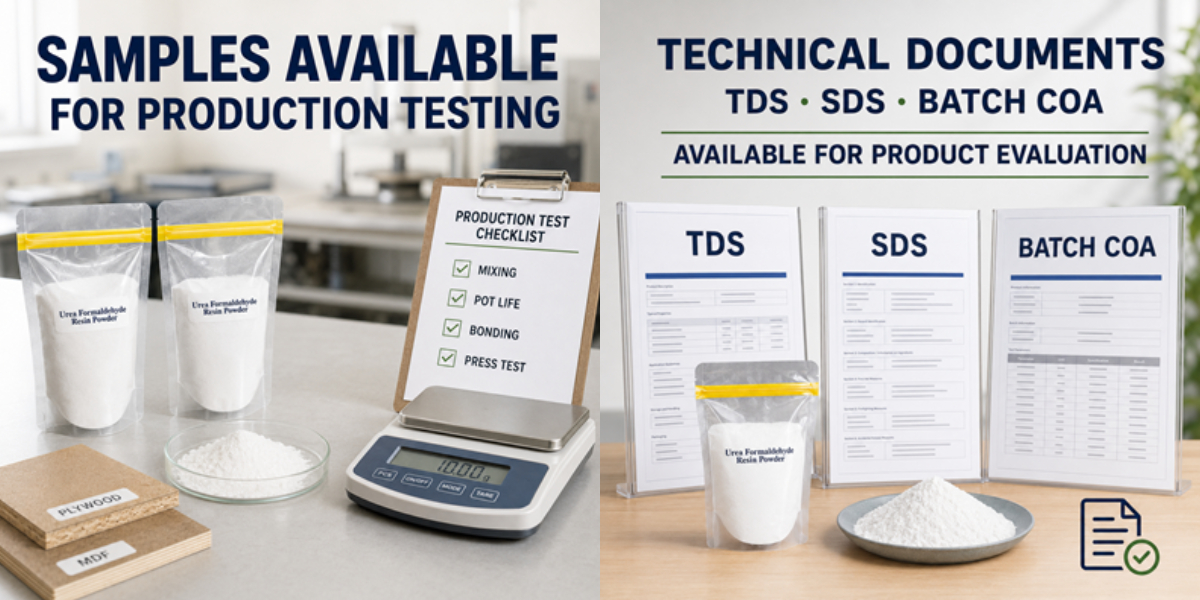
Samples, technical documents and batch COA are available for production testing.
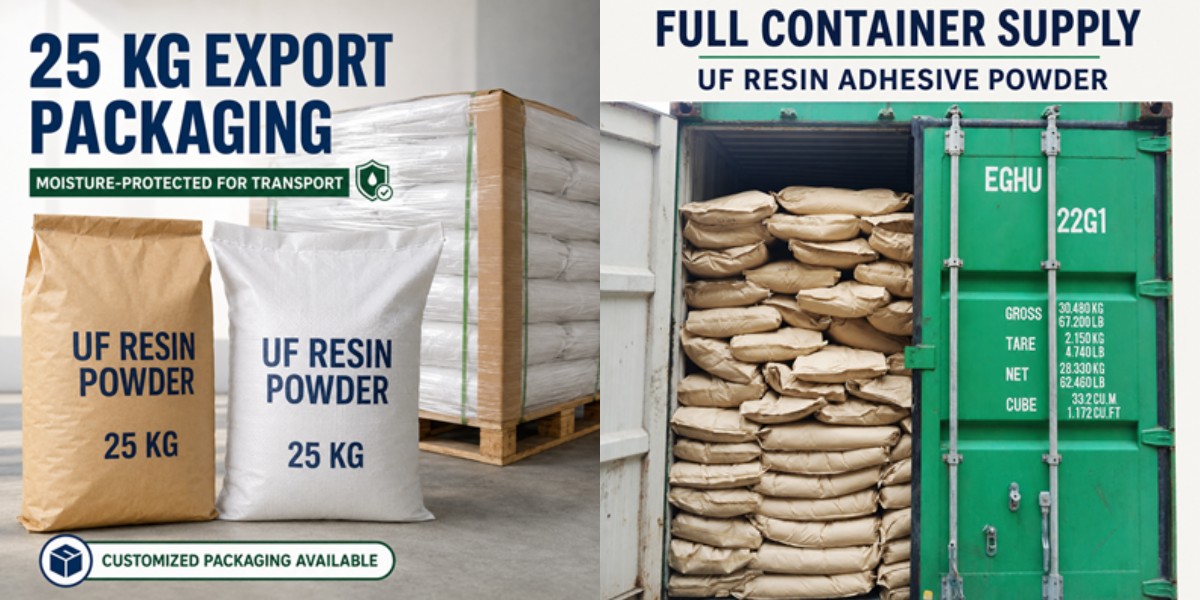
Flexible trial orders, 25 kg export packaging and full-container supply are supported.
Product Overview
Urea Formaldehyde Adhesive Powder is a water-soluble thermosetting adhesive designed primarily for plywood, MDF, particleboard, veneer laminating and other wood-processing applications. Compared with ready-to-use liquid adhesive, Urea Formaldehyde Adhesive Powder is easier to transport and store because customers only add water when preparing the glue. Different grades can be selected according to the press method, required working time, ambient temperature, board structure and production speed. Urea Formaldehyde Adhesive Powder provides good bonding performance, a light-colored glue line and convenient preparation for industrial users. Before bulk purchasing, customers can test Urea Formaldehyde Adhesive Powder under their own production conditions to confirm the mixing ratio, viscosity, curing time and finished-board performance.
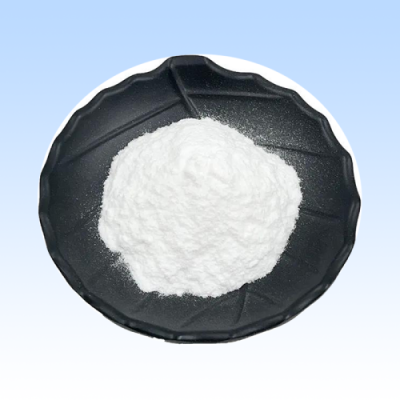
The product is supplied as a fine white powder and is normally mixed with water before application. A matched solid powdered hardener can also be provided according to the selected grade and production process. Because press temperature, wood species, veneer moisture, board thickness and equipment settings differ between plants, the final formulation should be determined through production testing rather than by relying on one universal recipe.
Typical Product Parameters
The following values are typical reference specifications. Exact parameters may vary by grade and should be confirmed in the technical data sheet and batch COA supplied with the order.
Parameter | Typical Reference Value |
Product | Urea Formaldehyde Adhesive Powder |
Alternative Names | UF Resin Powder, UF Glue Powder, Powdered Wood Adhesive |
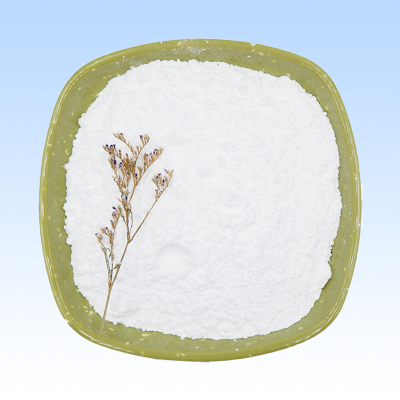
Appearance | Fine white powder |
Fineness | At least 95% passing an 80-mesh standard sieve |
Moisture Content | Maximum 3% |
pH Value | 7.0–8.0 |
Reference Viscosity | 3,500–4,000 mPa·s or 5,500–7,000 mPa·s |
Reference Bond Strength | Above 1.8 MPa |
Reference Gel Time at 25°C | Approximately 1–2 hours, adjustable by grade |
Typical Powder-to-Water Ratio | Approximately 1:1 by weight |
Optional Powdered Hardener | Dosage determined by grade, temperature and required pot life |
Recommended Storage | Sealed in a dry, cool and ventilated location |
Reference Shelf Life | Up to 12 months under suitable storage conditions |
Standard Packaging | 25 kg export bag |
HS Code | 39091000 |
Documents Available | TDS, SDS and batch COA |
These figures should not be treated as a universal production formula. Customers should provide their target application, press conditions and performance requirements so that a more suitable grade and starting formulation can be recommended.
Application Fit and Processing Options
This powdered UF adhesive is mainly recommended for plywood, medium-density fiberboard, particleboard, veneer laminating, furniture components, curved wood, edge bonding and general interior wood products. It can also be evaluated for paper-related bonding applications when the customer’s process requires a water-soluble thermosetting binder.
Grades are available for hot press and cold press processes. Hot press production usually requires evaluation of press temperature, pressure, board thickness and production speed. A common hot press reference range is 80–120°C, although the actual setting must be established through testing. Cold press applications generally require a suitable hardener system and sufficient pressing time. Customers should also consider veneer or wood moisture, surface flatness, glue spread and ambient temperature.
Standard UF adhesive is generally best suited to interior wood products used under dry conditions. Applications requiring high resistance to prolonged moisture, boiling water or exterior exposure may require a modified resin system. Buyers should clearly state the desired board standard, water-resistance requirement and formaldehyde-emission target before requesting a quotation.
Easy Mixing and Production Guidance
A typical starting procedure is to prepare the adhesive using UF resin powder and water at approximately a 1:1 weight ratio. Add about two-thirds of the required water to the mixing vessel first. Introduce the adhesive powder gradually while mixing until no visible dry lumps remain. Add the remaining water and continue mixing for approximately three to five minutes, or until a smooth and uniform glue is obtained.
When a hardener is required, the matched solid powdered hardener should be added according to the recommended grade-specific dosage. The mixing sequence is therefore:
UF Resin Powder + Water + Powdered Hardener = Prepared Glue
The hardener amount affects curing speed and usable working time. Higher ambient temperatures or excessive hardener may shorten pot life, while lower temperatures may slow curing. For some hot press grades, additional hardener may not be necessary. The prepared adhesive should be tested before continuous production.
As an initial reference, glue spread may be approximately 150–160 g/m², depending on the material surface and board construction. Wood moisture is commonly controlled around 8–10%, with an appropriate production tolerance. Technical guidance can be provided for mixing sequence, viscosity adjustment, hardener selection and initial press settings.
Cost and Operational Advantages
Powder form gives industrial buyers greater flexibility than transporting an equivalent quantity of water-containing liquid adhesive. It can reduce unnecessary freight weight, simplify storage and allow customers to prepare only the quantity required for current production. Sealed bags are also convenient for container loading and long-distance international transportation.
The product dissolves in water without requiring complex glue-making equipment. Plants can adjust prepared-glue viscosity, curing speed and working time according to their application and process conditions. Available grades cover different viscosity and gel-time requirements, allowing buyers to select a practical balance among production speed, bonding performance and operating cost.
For procurement teams, the main benefit is not simply a lower unit price. A suitable powder grade can help reduce freight cost, storage space, unused liquid adhesive and production interruptions caused by unstable preparation. Samples and technical support help buyers verify the complete cost per finished board before placing a larger order.
Samples and Production Testing
Samples are available for laboratory evaluation and production-line trials. Before testing, customers are encouraged to provide information about the wood species, plywood or panel structure, veneer moisture, press type, press temperature, pressure, target working time, glue spread and required board standard.
Testing should normally cover powder dissolution, prepared-glue viscosity, pot life, initial tack, curing time, bonding strength, glue-line appearance and finished-board performance. Where formaldehyde requirements apply, the buyer should state the required test method and target standard in advance. Product selection should be based on test results under the customer’s real operating conditions.
Technical documents such as the TDS and SDS can be supplied for product evaluation. A batch COA can be provided with commercial shipments to show the inspected parameters for the supplied lot. Third-party inspection or testing can also be arranged upon request, subject to the agreed test scope, laboratory and related cost.
Packaging and International Logistics
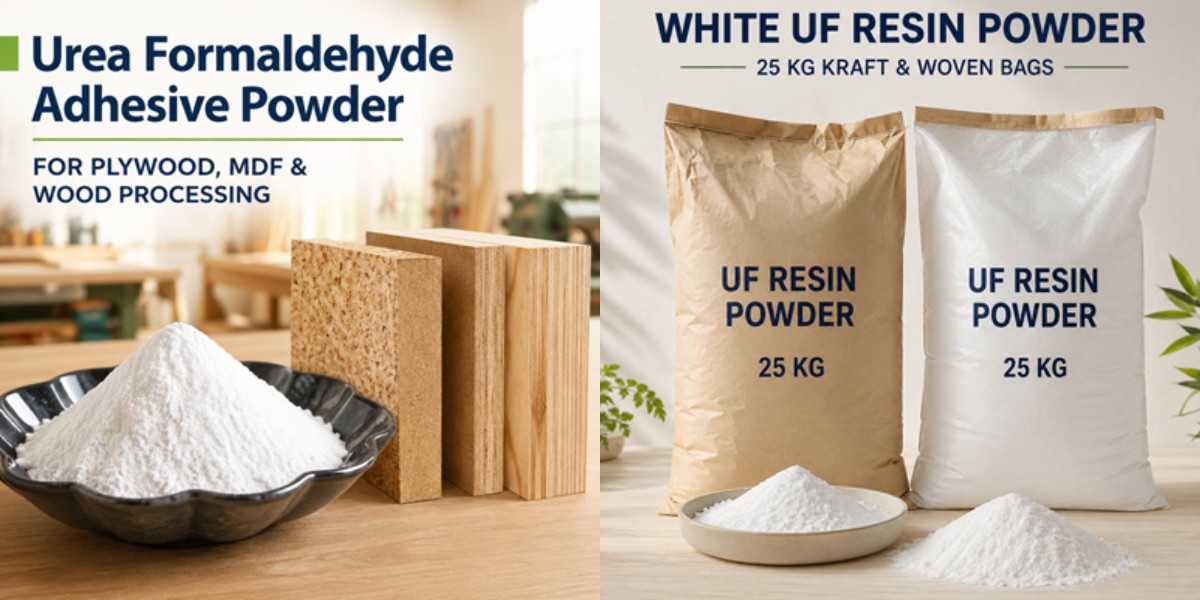
The standard export package is a 25 kg moisture-resistant bag. Kraft paper bags and white woven bags with an inner moisture barrier are available according to the selected grade and order requirements. Customized bag printing, neutral packaging and private-label options can be discussed before order confirmation.
The bags should remain sealed and be stored in a cool, dry and ventilated area away from direct sunlight and moisture. Any unused powder should be resealed immediately after opening. Under suitable storage conditions, the reference shelf life can be up to 12 months; higher storage temperatures and humidity may shorten the effective storage period.
Trial quantities and full-container orders are supported. Logistics options include FOB, CIF and door-to-door delivery where service is available. The shipping plan can be prepared according to the order quantity, destination port, packaging type and local import requirements. Loading photos, packing details and shipment documents can be provided as part of the order process.
Export Experience and Supply Support
Taian Guangyuan International Trade Co., Ltd., established in 2010, specializes in the international supply of chemical raw materials. As a professional trading and supply-chain service company, we work with qualified partner manufacturers rather than presenting ourselves as the owner of a production plant.
Our experience serving customers in more than 100 countries helps us understand different procurement procedures, destination requirements and documentation needs. Urea formaldehyde adhesive powder has been supplied to customers in Europe, South Asia, Southeast Asia, the Middle East and Africa for evaluation and commercial use.
Our service includes grade matching, sample coordination, technical-document preparation, batch quality verification, packaging selection and international logistics planning. Customers can begin with a production test and move to commercial or full-container purchasing after confirming product suitability.
Customer Application Experience
Customers commonly focus on four points during evaluation: whether the powder dissolves smoothly, whether the prepared glue remains workable for the required period, whether the adhesive matches the existing press process and whether the finished panel achieves the expected bonding result.
Feedback from completed evaluations frequently highlights the convenience of powder storage, reduced freight burden compared with liquid glue and the flexibility to prepare adhesive according to daily production demand. Some customers require faster curing for hot press lines, while others prioritize longer working time for cold press assembly. These differences are addressed through grade selection and controlled production testing.
For confidentiality reasons, customer names and proprietary formulations are not published without authorization. Application photos, loading records and relevant test documents can be shared where permitted.
Test the Product Before Your Bulk Order
Tell us your wood material, press method, working temperature, required pot life and target board standard. We can recommend a suitable grade, prepare a sample and provide the relevant technical documents for your production test.
Request a Sample or Quotation Today